Specialised Clinic
A fall is rarely one thing going wrong. It is usually four or five small things at once, and almost all of them can be found and fixed.
Medically reviewed by the Aegis Clinical Team
Why this clinic exists
By the time a parent falls, the risk has usually been building for months. Weakening legs, a new tablet, a bathroom with nothing to hold. The fall is the moment all of it becomes visible.
1 in 4
adults over 65 fall each year
Under half
of those who fall tell their doctor
Double
the risk of falling again after one fall
1 in 10
falls causes an injury that limits daily life
Source: US Centers for Disease Control and Prevention, Facts About Older Adult Falls. Sri Lanka has no equivalent national falls registry, which is part of the problem.
The Assessment
International guidance is clear that falls need a multifactorial assessment, because the causes stack. Checking only the legs, or only the medication, is how the next fall happens.
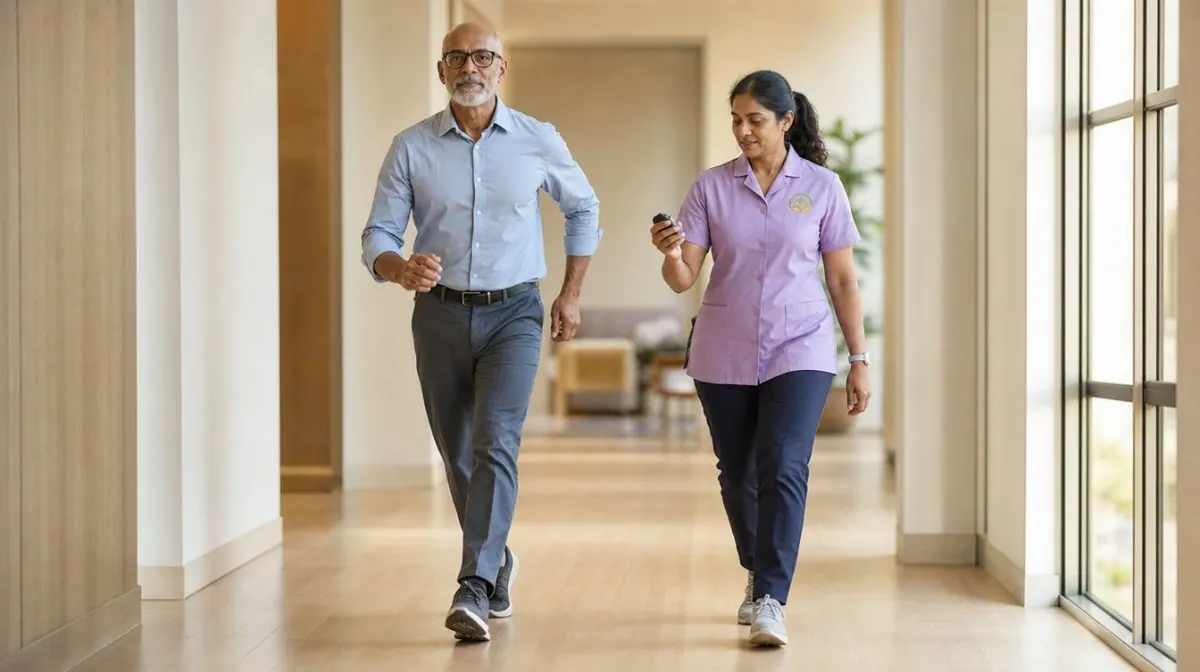
Timed Up and Go, chair stand and the short physical performance battery. Measured, so we can show you what changed six weeks later.
Every tablet, including the ones bought over the counter. Sedatives, blood pressure and diabetes medication are among the commonest causes we find.
A drop on standing is a frequent and very fixable cause of falls, and it is missed unless someone measures it both ways.
If a fall is going to happen anyway, whether it breaks a hip depends on the bone. Fracture risk is assessed alongside fall risk, not instead of it.
Cataract, the wrong glasses for stairs, painful feet, and slippers with no back to them. Small things, repeatedly decisive.
Rushing to the toilet at night is one of the most common fall stories we hear. So is the confusion of a new infection.
Assessment domains follow the World Guidelines for Falls Prevention and Management for Older Adults, Age and Ageing, 2022.
Strength and Balance
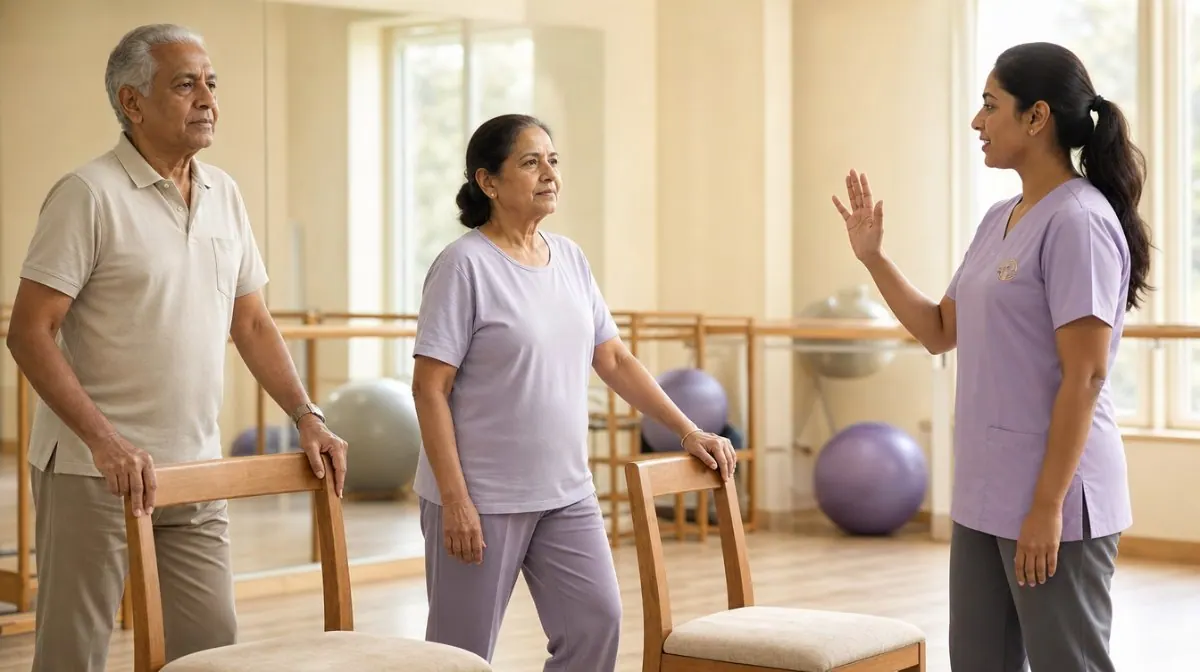
Progressive strength and balance training is the single intervention with the strongest evidence behind it for preventing falls. Not walking, not a supplement, not a gadget. Training that is hard enough to be training.
That is the part most programmes get wrong. Pitched too gently it does nothing, and pitched too hard it causes the fall it was meant to prevent. Your programme is set against measured strength and balance, then raised as those numbers move.
Sessions run in our studio or at home, and the exercises are written down in a form your parent will actually do on the days nobody is watching.
The House
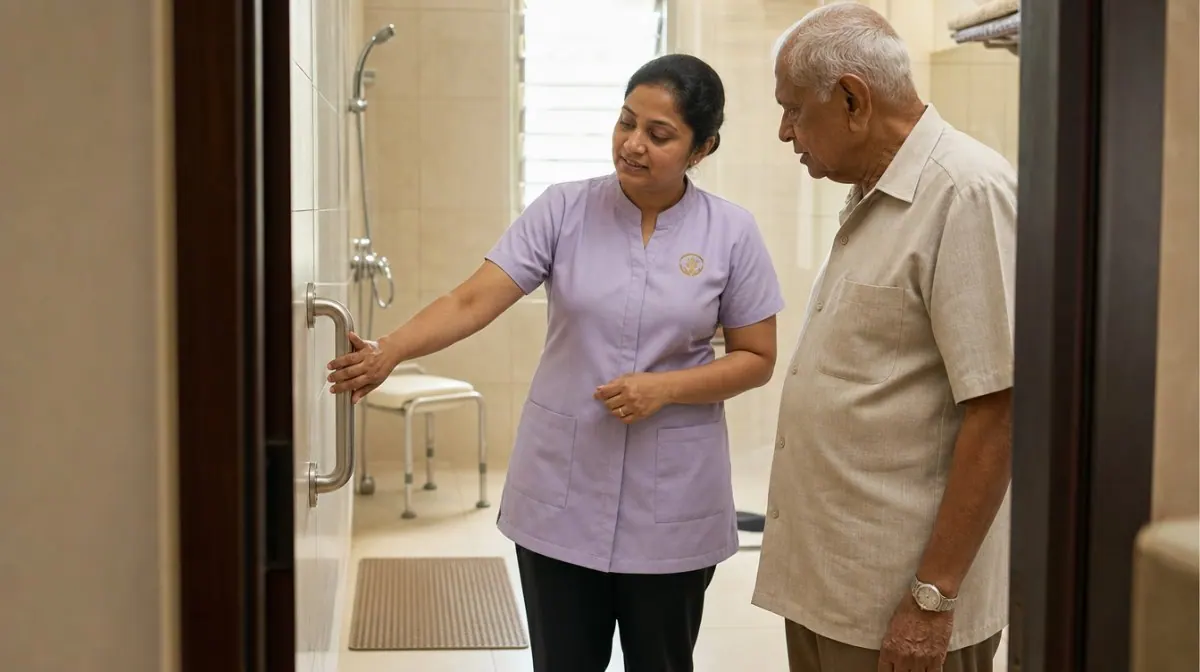
A wet bathroom floor with nothing to hold. A bed too low to rise from. One step half an inch higher than the rest. The rug by the door. The thing needed every morning that now sits on the top shelf.
We walk the house with your parent and watch the routine as it is genuinely done, not as it is described. What comes back is a short list, in priority order, with what it costs.
A good deal of it is free and takes an afternoon. A grab rail in the right place, better light on the stairs, shoes with a back to them.
From our Falls Clinic & Awareness session
Prevention comes first, but everyone over sixty should also know how to get up safely after a fall. At our community session the team walked older adults and their families through a simple method that can be practised at home.
If you are hurt, dizzy or cannot get up, stay where you are, keep warm and call for help. Practise the steps with a physiotherapist before you ever need them.
Watch
Filmed at Aegis with our physiotherapy team, with captions on screen.
One chair and thirty seconds. A simple way to gauge lower body strength and fall risk at home.
The complaints we hear most often from older parents, and what they are signalling.
Our physiotherapist on rehabilitation that restores independence rather than treating one joint.
Who It Is For
Most families come after a fracture. The families who come after a near miss get a far better outcome, for a fraction of the cost and none of the fear.
Fallen in the past year
Feeling unsteady or holding furniture
Parkinson’s
Stroke recovery
After a hip or knee replacement
Recovering from a fracture
Osteoporosis or low bone density
On four or more daily medicines
Dizziness on standing
Avoiding stairs or going out
How It Works
Ninety minutes with our Consultant Geriatrician and physiotherapist. Everything in the six domains above, measured and written down.
What is raising the risk, ranked. Usually four or five things, and usually at least one nobody had connected to falling.
A written plan with the exercise programme, any medication recommendations for the prescribing doctor, and the home changes in priority order.
Re-measured at six weeks and again at three months. If the numbers have not moved, the plan was wrong and we change it.
Led by a geriatrician, not a class. Assessments are run by Dr. Sithira Senevirathne, Sri Lanka’s first board certified Consultant Geriatrician, with Vidhya Baskaran, our Lead Physiotherapist.
Questions
Anyone over 65 who has fallen in the past year, who feels unsteady on their feet, or who has started avoiding stairs, uneven ground or going out alone. You do not need to have had a serious fall. A near miss, or a parent quietly holding furniture as they move around the house, is reason enough.
Yes. Falling once roughly doubles the chance of falling again, and the second fall is often the one that breaks something. An assessment after a first fall is the whole point of the clinic.
About ninety minutes. We measure walking, balance and leg strength using the Timed Up and Go, chair stand and short physical performance tests, review every medication being taken, check blood pressure lying and standing, and look at vision, feet, footwear, bone health, continence and memory. You leave with a written plan.
No. The assessment is led by a Consultant Geriatrician, because most falls have several causes at once and only some of them are muscular. Physiotherapy is usually part of the plan that follows, but it is not the whole of it.
That is common, and it is one of the most useful things the clinic finds. Sedatives, blood pressure medication and several others raise fall risk, often in combination. We write to the prescribing doctor with a recommendation rather than changing anything behind their back.
For the home hazard part, yes. Most falls happen at home, and a bathroom or a stairway cannot be assessed properly from a clinic room. Where the picture is already clear we can do this as a separate home visit after the clinic assessment.
Progressive strength and balance training is the single intervention with the strongest evidence behind it. It has to be the right kind, though. General walking on its own does not reduce falls, and a programme pitched too easily will not either.
One assessment, an honest list of what is raising your parent’s risk, and a plan you can start on the same week.
Supervised by Sri Lanka's first board-certified Consultant Geriatrician