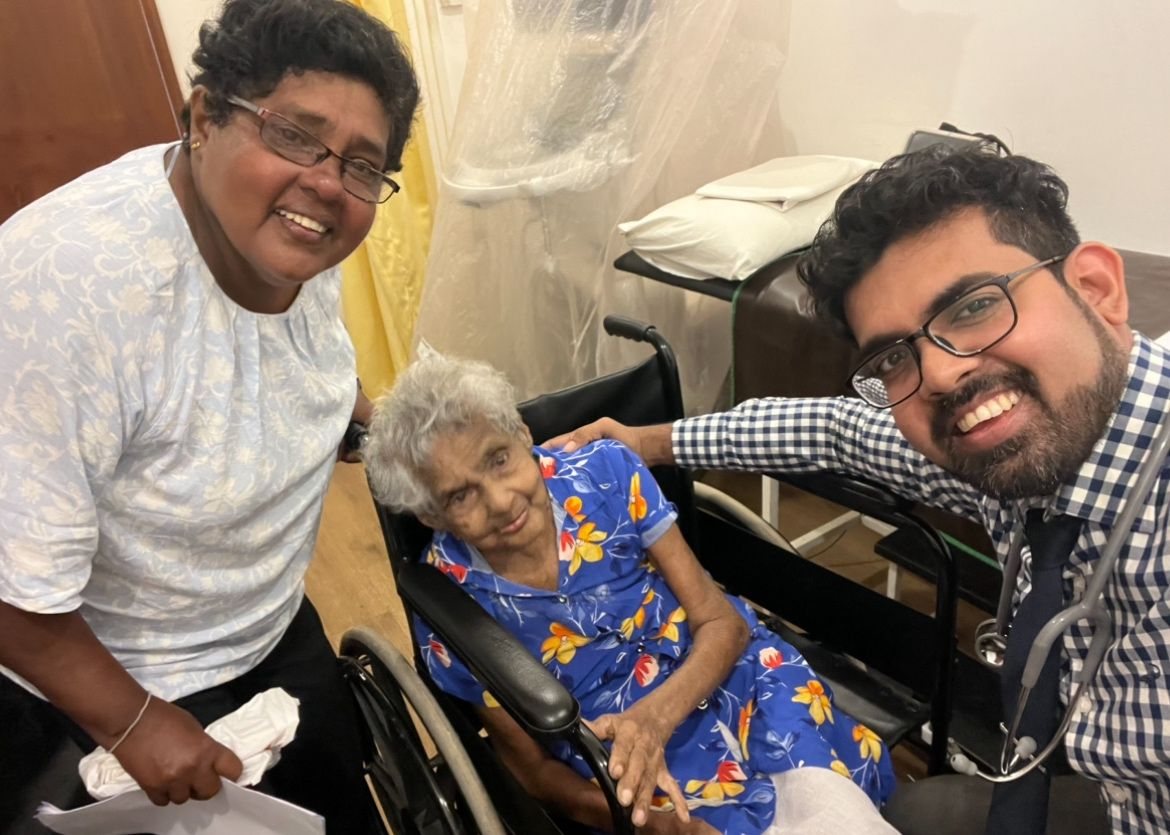
What does it take to be a centenarian? Diet. Exercise. Social relationships. Health literacy. Genetics. All of them probably have a role to play, and I am not sure anyone can tell you the weighting with confidence.
Within the space of a few days this month I saw three patients aged 100, 101 and 102. That does not happen often, even in a busy geriatric clinic.
What stayed with me was not their blood pressure or their medication lists. It was that every one of them had a very sweet, loving personality.
An observation, not a finding
I am careful about what I take from that. A gentle temperament may help a person reach one hundred. Or reaching one hundred surrounded by people who love you may be what makes a person gentle. I cannot separate the two, and neither can anyone else.
What we measure in older people tends to be whatever is easiest to measure. Grip strength, gait speed, creatinine. How a person is treated, and how they treat others, appears nowhere in the notes.
It is still worth saying out loud. A comprehensive geriatric assessment is built to catch the things that are countable, and it should be. But the life a person is actually living sits mostly outside the columns, and a clinic that never asks about it is working with half the picture.
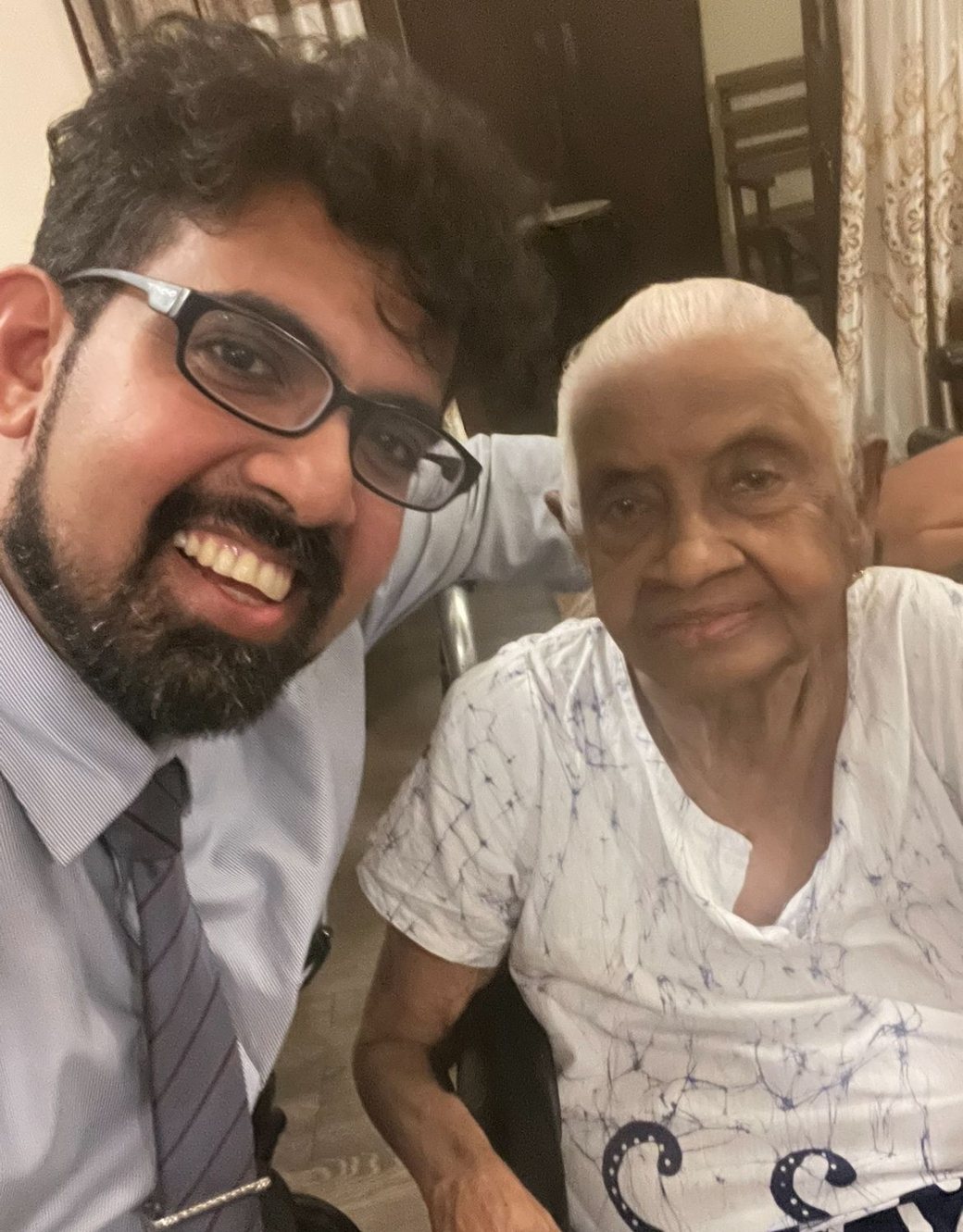
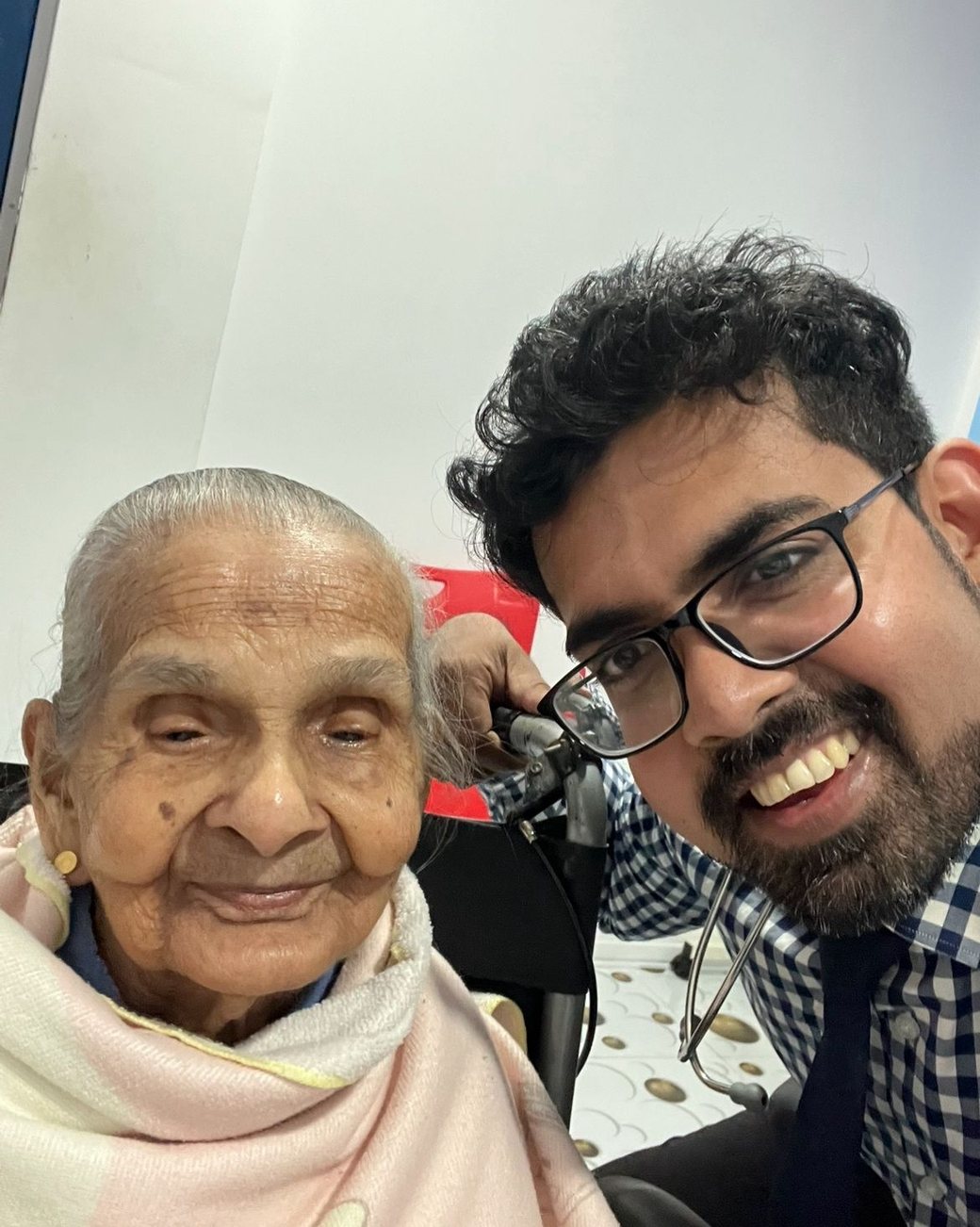
Photographed by Dr Sithira Senevirathne during the visits, and shared with the consent of the patients and their families.
The number behind the three
Eighteen percent of Sri Lankans are already over sixty. By 2041 it will be one in four. Very few of them will ever see a geriatrician.
That is the gap Aegis is being built to close. Not because three people reached one hundred, but because most people will not, and the years before that are where the difference is actually made.
Sources. Population over sixty: Department of Census and Statistics, reported September 2026. One in four by 2041: UNFPA Sri Lanka projection. Ages as recorded in clinic by Dr Sithira Senevirathne.